
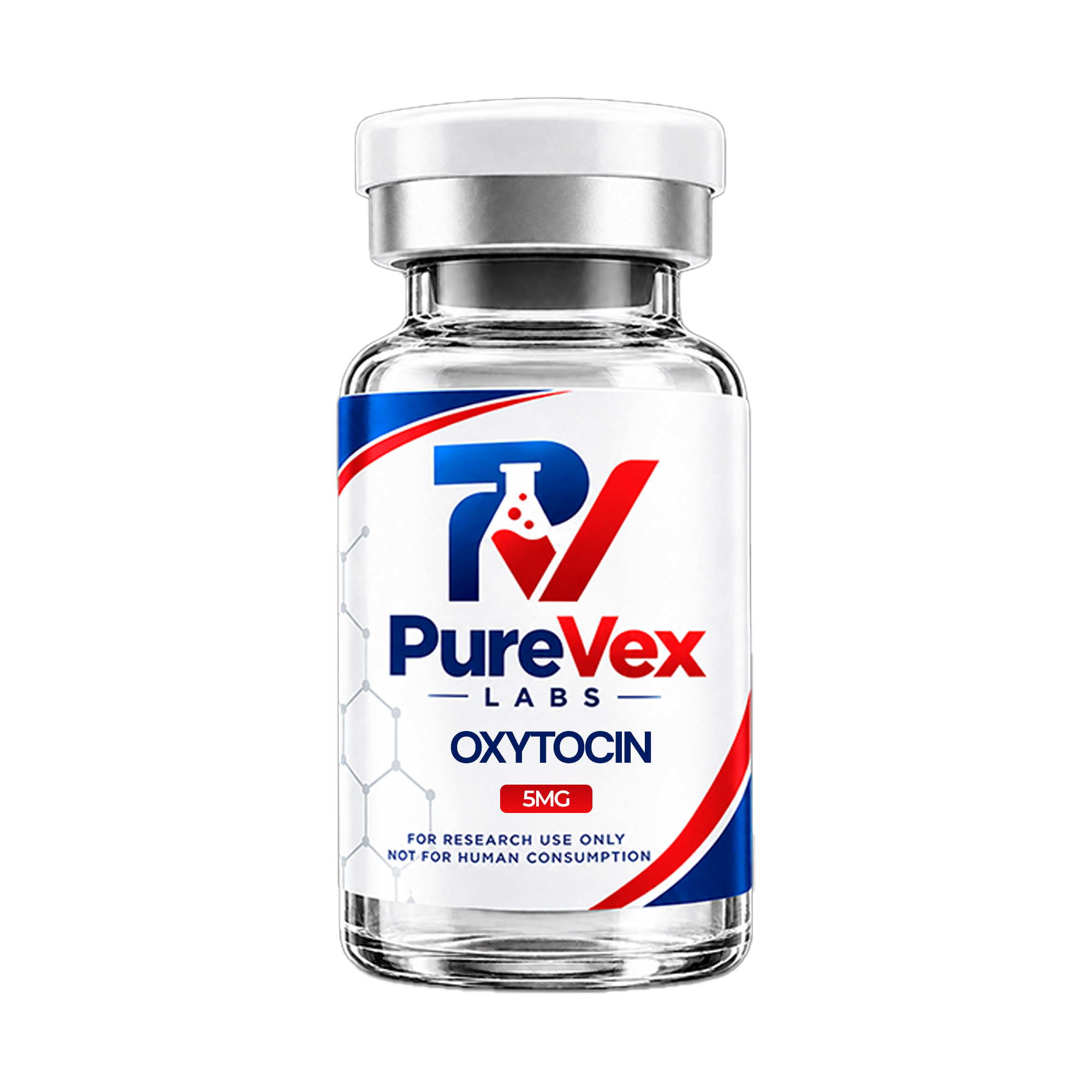
$64.90
CAS #: 50-56-6
Molecular Formula: C₄₃H₆₆N₁₂O₁₂S₂
Molecular Weight (M.W.): 1007.2 g/mol
Sequence: Cys-Tyr-Ile-Gln-Asn-Cys-Pro-Leu-Gly-NH₂
One-Letter Sequence: CYIQNCPLG
Structural Representation: H-Cys(1)-Tyr-Ile-Gln-Asn-Cys(1)-Pro-Leu-Gly-NH₂
Product Type: Cyclic Research Nonapeptide
Oxytocin is a cyclic nine-amino-acid peptide supplied for controlled laboratory and analytical research. Its defined structure includes a disulfide linkage between the cysteine residues at positions 1 and 6, creating the molecule’s characteristic cyclic portion.
The peptide also contains a C-terminal glycinamide group. These structural features are important for accurate chemical identification and should be considered when comparing analytical or sequence data.
Oxytocin may be used in non-clinical scientific research involving peptide characterization, receptor-associated biochemical systems, molecular interactions, structural analysis, and related experimental models.
Oxytocin may be examined in controlled scientific environments involving:
Any observations should remain limited to the specific experimental design and should not be interpreted as demonstrating therapeutic, behavioral, reproductive, or clinical effects in humans.
Oxytocin consists of nine amino-acid residues:
Cys-Tyr-Ile-Gln-Asn-Cys-Pro-Leu-Gly-NH₂
One-letter representation:
CYIQNCPLG
The cysteine residues at positions 1 and 6 form an intramolecular disulfide bridge, producing the cyclic peptide structure. The C-terminal glycine is amidated.
Analytical characterization may include:
Care should be taken to distinguish standard amidated oxytocin from alternative forms such as oxytocin free acid, which has different molecular specifications.
Lot-specific documentation should be reviewed for:
Authenticated product documentation should take precedence if the supplied form differs from the standard reference structure.
Store according to the conditions specified on the product label and Certificate of Analysis. Protect the material from environmental conditions that may compromise peptide integrity.
Follow established laboratory procedures appropriate for research peptides.
Oxytocin is supplied exclusively for laboratory research, analytical testing, and scientific reference purposes.
For research use only. Not for human or veterinary use. Not intended for consumption, administration, reproductive use, behavioral use, diagnosis, treatment, mitigation, cure, or prevention of any disease. No therapeutic, hormonal, reproductive, medical, or clinical claims are made or implied. Product information is supplied solely for scientific identification, documentation, and research reference.
| dose | 5mg |
|---|
Pure Vex Labs sells research peptides exclusively to qualified researchers and laboratories for in vitro and laboratory use. Please confirm before continuing.
By proceeding you affirm the statements above are true. Products are not for human or veterinary use, not for use in diagnostic procedures, and have not been evaluated by the U.S. Food and Drug Administration.
Not a researcher? Exit
Reviews
There are no reviews yet.